
Why AI sourcing dashboards optimize the wrong metric
AI sourcing dashboards measure applications and source performance. They miss whether your team can screen candidates before they accept another offer.
Ployo Team
Category
AI sourcing dashboards measure applications and source performance. They miss whether your team can screen candidates before they accept another offer.
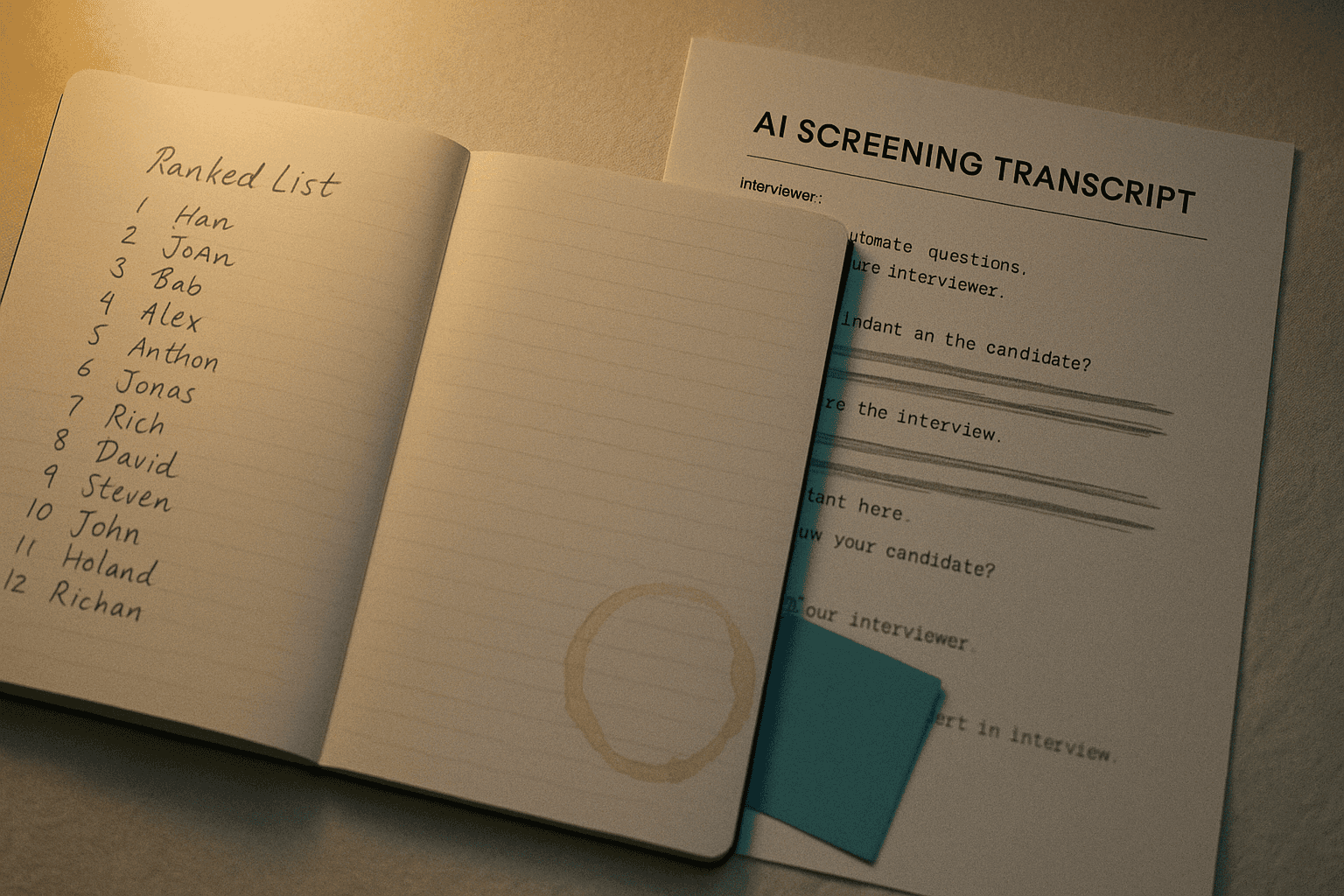
The AI scored him 43. Short tenures, low signal. I almost skipped the transcript. What I read late on a Thursday changed how I think about churn.
Online assessments draw scepticism from hiring teams. Here's what the research actually shows about accuracy, bias, soft-skill measurement, and candidate views.
HR teams sit on rich data but struggle to use it: the bottlenecks blocking people analytics and how AI turns messy HR data into reliable decisions.
Modern ATS handles massive applicant spikes: scalability, auto-screening, parsing, assessment integration, and a better candidate experience at scale.
Pick the right workforce planning model (operational, strategic, scenario, skills-based, or AI-assisted) based on workload, growth pace, and data readiness.
Workforce planning aligns staffing with future business needs. Here are the core elements, common gaps, and the AI tools changing how planning works.
Recruitment automation ROI goes well beyond saved hours: cost, quality, retention, brand, compliance. The metrics, formula, and worked example.
Hiring algorithms encode bias from their training data: what the research shows and how transparency, audits, and design choices fix it.
Emotional analytics reveals candidate stress, engagement, and comfort during interviews: how it works, where it helps, and the ethical lines that matter.
Real-time hiring analytics forecasts candidate success before interviews: how AI models work, what data they use, and how recruiters apply the insights.
Connected recruitment ecosystems beat fragmented tooling: components, integration challenges, performance gains, and a phased adoption path.
Track the right operational workforce planning metrics (capacity, cost, quality, agility) and turn them into decisions rather than dashboard noise.
Predictive hiring uses data and AI to forecast candidate success. Here are the technologies, benefits, and shifts that define recruiting by 2030.
Recruitment budgets bleed through hidden channels: the true cost categories, the leaks teams miss, and the moves that genuinely reduce hiring spend.
Most recruitment cost overruns come from process inefficiency, not pay scarcity: how to reduce hiring spend without sacrificing candidate quality.
Cut HR costs without harming morale: overlooked cost drivers, smart optimisation strategies, and the role of automation and analytics.
Manual recruitment screening's true cost spans recruiter time, mis-hire risk, and brand damage: the hidden expenses and how automation reduces them.
Workforce planning and analytics cut hiring mistakes: how they work, the benefits for both sides, and best practices for accurate, fair hiring.
Workforce forecasting explained: why it matters, how it benefits both employers and employees, and best practices for accurate projections.
Data-driven hiring uses analytics, predictive models, and structured signal: why it consistently outperforms keyword matching for both candidates and teams.
Quality of hire sounds like the perfect metric, but its flaws cost HR teams millions. The problems, hidden costs, and smarter alternatives.
Data-driven recruitment uses funnel metrics, talent intelligence, and AI: the data that matters, the tools that collect it, and how to act on it.
The talent acquisition metrics that matter (time-to-fill, cost-per-hire, quality-of-hire, source quality) plus best practices and tools.