
Is AI interviewing legal for aged care and NDIS hiring in Australia?
Updated August 2026
Short answer: yes, with conditions. No Australian law bans the use of AI to interview or screen job candidates. What the law does regulate is how you handle the candidate's personal information, whether a human makes the actual hiring decision, whether the process discriminates, and whether you can still prove every mandatory worker check was done. Most of the risk in this area does not come from the technology. It comes from vendors who blur the line between screening a candidate and deciding about a candidate, and from providers who cannot produce evidence of how a decision was reached when a regulator asks. This page sets out what actually applies, and the questions worth asking any vendor before you sign.

Which Australian laws apply to AI interviewing?
There is no single "AI hiring law" in Australia. Five separate things apply at once.
The Aged Care Act 2024 (Cth). Commenced 1 November 2025. It carries the provider obligations around a suitable, screened workforce. Nothing in it prohibits automated screening tools. What it does mean is that if you use one, your worker screening obligations do not move to the vendor. They stay with you.
The Privacy Act 1988 (Cth) and the Australian Privacy Principles. A recorded video interview is personal information, and often sensitive information. You need consent, a stated purpose, a retention period, and a lawful basis for any overseas storage. If your vendor stores candidate video outside Australia, that is a cross-border disclosure and APP 8 applies to it.
Automated decision-making transparency. Under the Privacy and Other Legislation Amendment Act 2024, from 10 December 2026 organisations must disclose in their privacy policy where automated decision-making is used in decisions that significantly affect a person's rights or interests. Recruitment scoring sits squarely in that. The OAIC has been consulting on guidance for this. If you are running AI screening now, your privacy policy will need to say so before that date.
Anti-discrimination law. The Age Discrimination Act, Disability Discrimination Act, Racial Discrimination Act and Sex Discrimination Act all apply to a hiring process regardless of whether a human or a model produced the score. A tool that infers age, disability, accent or ethnicity and lets that influence an outcome creates liability for the employer, not the vendor. The Australian Human Rights Commission has published on exactly this risk.
Mandatory worker checks. NDIS Worker Screening Check, AHPRA registration, National Police Check, Working with Children Check, and the qualifications your role requires. These are verification obligations. An AI interview can ask about them and record the answer. It cannot verify them, and no vendor should tell you otherwise.
Do Australian regulators prohibit AI screening?
No. No Australian regulator prohibits the use of AI to screen candidates, and the Aged Care Quality and Safety Commission publishes guidance for providers who use AI tools in recruitment rather than a prohibition on them. What regulators consistently warn about is narrower and more specific: fully automated candidate filtering, with no human review and no explanation of why a candidate was excluded. That distinction is the whole ballgame, and it is worth being precise about it. Read the Commission's guidance directly before you set your own policy, and treat any vendor summary of it, including this one, as a starting point rather than an authority.
What is the difference between AI screening and AI deciding?
An AI tool that conducts a structured first-round interview, records it, scores the answers against criteria you set, and hands a recruiter a ranked list with the evidence attached is doing screening. A human still reads it and still decides. An AI tool that auto-rejects candidates below a threshold, with no human seeing them and no record of why, is deciding. That is where the ADM transparency obligations bite hardest, that is where discrimination exposure concentrates, and that is what regulators are actually warning about. If a vendor cannot tell you clearly which of those two things their product does, that is your answer.
What does a compliant AI screening setup look like?
Whatever tool you use, these are the things that should be true. They are also the things a regulator or an auditor will ask for.
A human makes every hiring decision. The tool ranks and evidences, it does not reject.
Every score traces back to something the candidate actually said, quoted from the transcript, not an opaque number.
Candidates are told an AI is conducting the interview, before it starts, and consent to the recording.
Nothing infers protected attributes. Age, accent, appearance, disability and health status must not be decision criteria, and the vendor should say so in writing.
Data residency is stated in the contract, not just on a marketing page.
Retention is defined and enforced automatically, with deletion you can evidence.
Your data is not used to train the vendor's models unless you have agreed to it in writing.
Mandatory checks are recorded as structured, auditable answers, so you can show which candidate was asked what, and when.
A candidate can ask why, and you can answer with the actual evidence.
How is Ployo set up for Australian compliance?
We build for regulated care and health hiring in Australia, so it is worth being specific rather than general. Here is what is actually contracted and configured, and what is not.
Human decision, always. Ployo runs the first-round interview and returns a ranked shortlist with a met, partially met or not met verdict against each of your must-have requirements. Your recruiters review candidates and make every hiring decision. The product does not auto-reject.
Evidence, not a black box. Every requirement verdict is backed by the candidate's own words, quoted from the transcript, timestamped against the recording. If you need to explain a decision, the explanation is already there.
No inferred attributes. Age, accent, appearance, disability and health status are prohibited as decision criteria. This is written into our data governance documentation, not just implied.
Australian data residency, contractually. For Australian customers we run in AWS Sydney, ap-southeast-2, and commit to it in the agreement, with no offshore transfer without your written consent. This is a per-agreement commitment, so confirm it is in your contract rather than assuming it.
We do not train on your data. For customers on that clause, candidate data is not used to train, improve, test or develop AI models without written consent.
Defined retention. A rolling retention window with automated deletion, configurable, plus a documented deletion protocol with a deletion register, role-based access controls and periodic access review. On termination, data export and deletion within 30 days with written certification.
Compliance items are structured questions. Ployo asks about NDIS Worker Screening, AHPRA registration, police checks, Working with Children Checks, right to work and certifications as mandatory structured questions, and records the answers as auditable evidence.
What does Ployo not do?
This section matters more than the one above it.
We do not verify credentials against source registries. Ployo asks the candidate and records what they say. It does not query AHPRA, the NDIS Worker Screening Database or a police check provider. Verification remains your obligation and your process. Any vendor claiming to discharge that obligation for you is overstating what their product does.
We do not make hiring decisions, and we will not build a mode that does.
Ployo platform data
30,000+
AI Interviews Completed
340,000+
Candidate Answers Graded
70%+
Interview Completion Rate
15,000+
Recruiter Hours Saved
What should you ask an AI interview vendor?
Take these to whoever you are evaluating, including us.
- Does your product ever reject a candidate without a human reading the file?
- Where is candidate video stored, and is that written into the contract or only on your website?
- Do you train models on our candidates' data? Show me the clause.
- What is the default retention period, and how is deletion evidenced?
- Which protected attributes does your scoring use or infer? Show me it in writing.
- Can you produce the specific evidence behind any single score, on request?
- Do you verify credentials against source registries, or do you record what the candidate says?
- What happens to our data if we terminate?
- What are you doing about the ADM disclosure obligation that starts on 10 December 2026?
A vendor that answers all nine plainly is one you can defend to a regulator. A vendor that gets vague on questions 3, 5 or 7 is a risk you are taking on yourself. A comparison of nine AI interview tools against these same criteria, including where each one is weaker than the others, is at ployo.ai/guides/best-ai-interview-software-australia-care-health.
Registered Nurse · Aged Care · AI interview
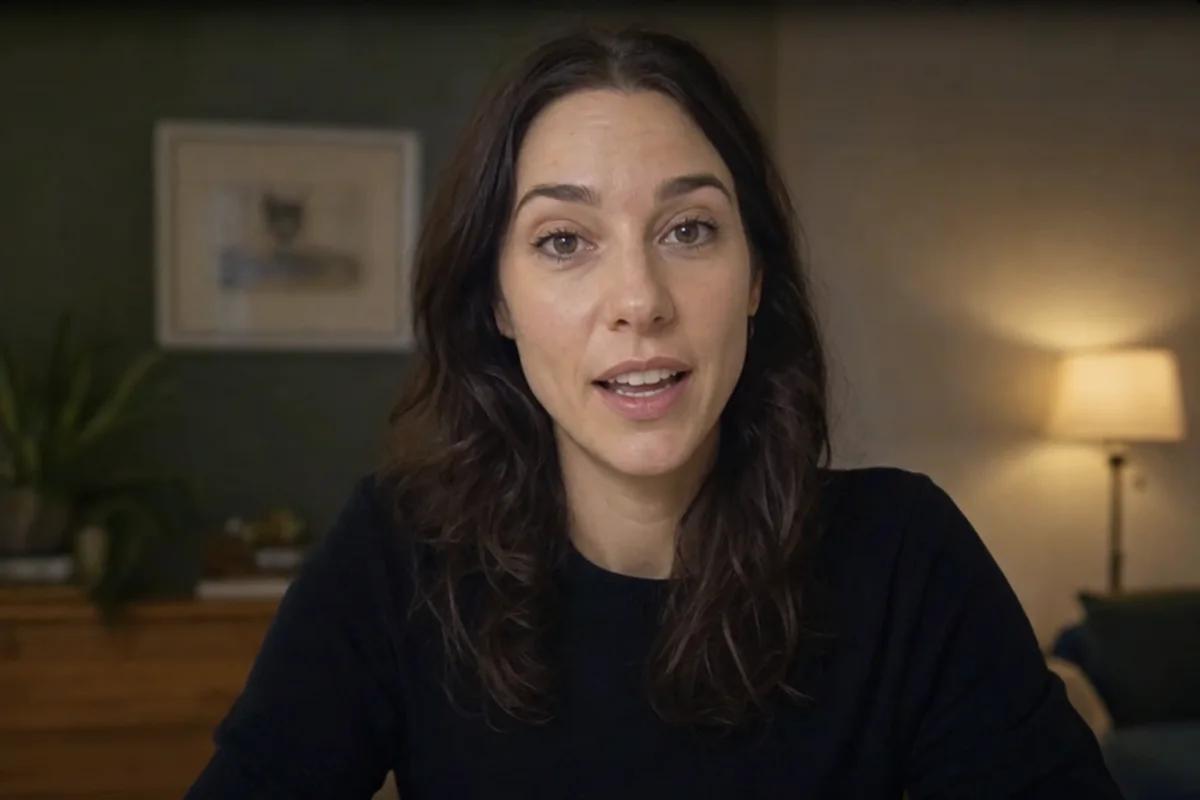
Live transcript
SARAH
Your CV says three years on a dementia ward. Walk me through a shift where a resident became distressed.
CANDIDATE
One of our residents kept trying to leave at night. I sat with her, worked out she was looking for her husband, and changed her evening routine.
SARAH · unscripted follow-up
You changed the routine. Who signed that off, and what did you write in the notes?
That second question did not exist until she answered the first.
Must-haves verified live
A first-round interview as it runs: camera on, two-way, transcribed live, with every must-have asked as a structured question and recorded as evidence.
References
- Aged Care Act 2024 (Cth), Federal Register of Legislation
- Aged Care Quality and Safety Commission, guidance on artificial intelligence tools in recruitment
- Privacy Act 1988 (Cth) and the Australian Privacy Principles, OAIC
- Privacy and Other Legislation Amendment Act 2024 (Cth), automated decision-making transparency
- NDIS Quality and Safeguards Commission, NDIS Worker Screening Check
- Australian Health Practitioner Regulation Agency, registration standards
- Australian Human Rights Commission, publications on artificial intelligence and discrimination
This page is general information about how Australian regulation applies to AI-assisted screening. It is not legal advice. Providers should confirm their own obligations with their legal and compliance teams.
TRUSTED BY HIRING TEAMS AT








Hiring right now? See it on a live role
Book a Demo, a 30-minute call. We'll set Ployo up on a role you're hiring for and walk through the shortlist together.
30-minute call · See Ployo on one of your live roles